
Reviewed · TOURS
Fiji: Village & Mud-Crab Catching Tour
The most unusual part of this Fiji day trip is not the island beach. It is the visit to Vusama Village, a historic community on the Tuva River where evidence of one of Fiji’s earliest permanent settlements has been found. You enter with warrior escorts, meet villagers, visit the chief’s bure, and take part in a traditional kava ceremony.
I like the warm village welcome and the chance to see cultural practices such as lali drumming, weaving, carving, and pottery. I also like the easy mix of river travel, a quiet island, a BBQ lunch, and free time for kayaking or snorkeling. The main drawback is that mud-crab catching is a short part of a much longer island day, and the advertised six-hour duration may not match the real door-to-door schedule.
In This Review
- Key points at a glance
- From your hotel to the Tuva River
- Entering Vusama Village with a formal welcome
- Pulling up crab pots on the river
- A quieter afternoon on Likuri Island
- BBQ lunch, beach time, and optional activities
- The mud-crab cooking lesson
- The river ride back and the real time commitment
- Is the $118 price good value?
- Who will enjoy this Fiji tour most?
- Should you book the Vusama Village and mud-crab tour?
- FAQ
- How much does the Fiji Village and Mud-Crab Catching Tour cost?
- How long does the tour last?
- Where does the tour operate?
- Is hotel pickup included?
- What happens at Vusama Village?
- Is mud-crab catching included?
- Will I cook the mud crab myself?
- Is lunch included?
- Are drinks included?
- What activities are included on Likuri Island?
- What should I bring?
Key points at a glance
- Vusama Village brings real cultural focus: Meet the community, enter the chiefly bure, learn about lali drums, and share kava.
- The crab activity is brief: You help pull up crab pots during the river journey, but the actual catch may not be the main event.
- Likuri Island is the second half of the day: Expect a BBQ buffet, beach time, kayaking, snorkeling when conditions allow, and optional walks.
- The village visit is the strongest part: The site’s connection to early permanent settlement gives the tour more meaning than a staged cultural stop.
- Transport takes time: Allow for a long coach ride, river boats, and a possible late return, especially if you are staying on the Coral Coast.
- Guide quality matters: Leon received particular praise for his friendly handling of the day.
From your hotel to the Tuva River
Your day begins with hotel pickup in an air-conditioned coach. Pickup is available from a wide range of hotels and resorts in Nadi, Denarau, Momi Bay, the Coral Coast, and as far south as Warwick, along with Nadi International Airport and Port Denarau.
The coach ride to Robinson Crusoe Jetty takes about an hour and a half. That is useful if you want to see more of Fiji beyond your resort, but it also means this is not a quick half-day outing. The route takes you through parts of Central Division Fiji before you trade the road for the river.
At the jetty, you board a river boat for about 15 minutes to Vusama Village. The boat ride is short, but it changes the mood of the day. Instead of arriving at a formal visitor center, you approach the village from the Tuva River and step ashore on the riverbank.
The full schedule says the boat leaves the jetty at 10 a.m. and leaves Likuri Island at 4 p.m. In practice, the hotel pickup and return transfer can make this a much longer day. One account describes waiting about an hour for the bus home, and another notes getting back around 6 p.m. If you have an evening flight, another tour, or a dinner reservation, leave plenty of space.
Other Nadi days people book alongside this one:
- Private Transfer-Nadi International Airport to Hotels
★ 5.0 · 551 reviews - Best of Nadi Highlights
★ 4.5 · 478 reviews - Cultural Night Tour
★ 4.5 · 470 reviews
Entering Vusama Village with a formal welcome
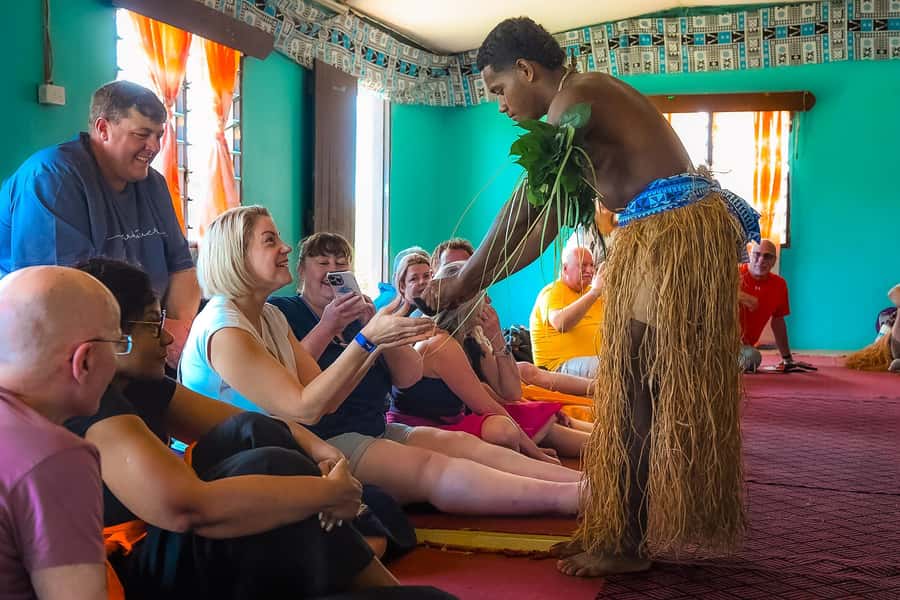
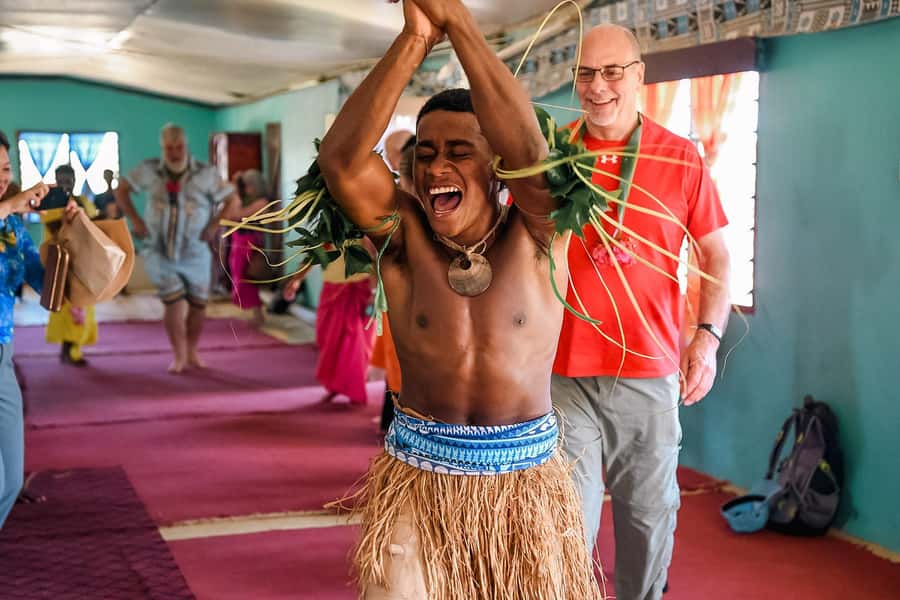
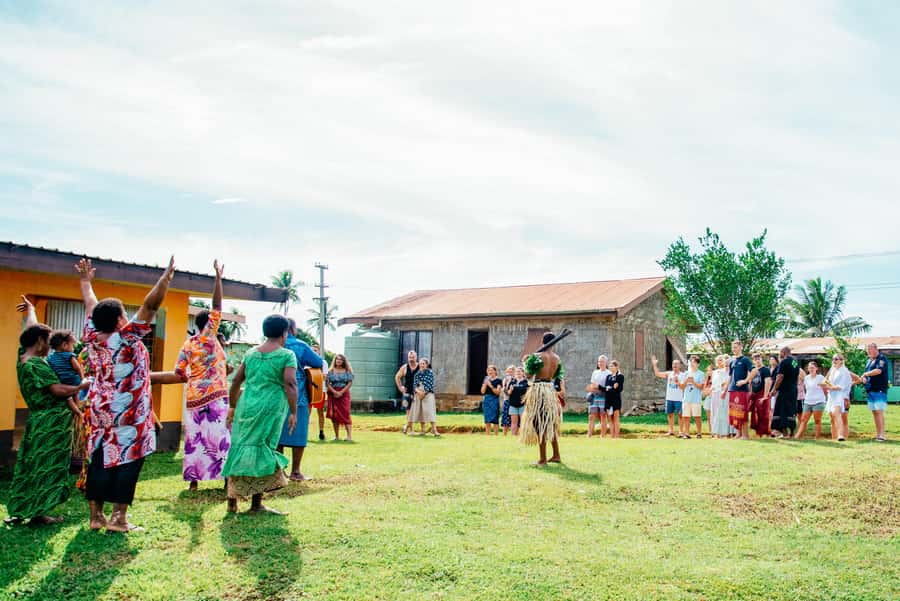
Warrior escorts lead you from the riverbank into Vusama Village. You receive a flower lei and meet members of the community before the cultural program begins.
The welcome is more than a quick photo stop. You visit the chief’s bure, a central meeting place with clear importance in Fijian village life. You also learn about the lali, the wooden slit drums traditionally used to send messages and call people together.
The village is especially interesting because it is associated with evidence of one of Fiji’s earliest permanent settlements. That gives the visit a strong sense of place. You are not simply watching a dance arranged for a resort audience. You are visiting a real village with a long connection to the Tuva River and its surrounding area.
Still, keep your expectations grounded. This is a guided cultural introduction lasting about 45 minutes, not a full day of independent village life. The visit moves through several elements, including the welcome, kava, the chiefly bure, drums, and a farewell dance. You will see a lot in a short time.
The kava ceremony is one of the day’s key moments. Kava is Fiji’s traditional drink, made from the ground root of the yaqona plant. The drink is shared according to local custom, and your guide should explain what to do before you take part. Its earthy taste and mild numbing effect can surprise first-time drinkers, so approach it as a cultural experience rather than a sweet refreshment.
The farewell dance brings the village portion to a close. The welcome and the people are often the most praised part of the tour, and I can see why. You get personal contact, a sense of ceremony, and a look at customs that are difficult to understand from a resort performance alone.
One practical caution: a scheduled village event or festival can change the visit. A prior booking fell on an important village day, which limited the usual experience and placed extra pressure on the community. If your date is flexible, it is sensible to ask if any local celebration is taking place.
Pulling up crab pots on the river
After the village, you board the boat again and continue toward Likuri Island. The river trip takes around 30 minutes, with a stop connected to the mud-crab activity and local marine life.
This is where the tour needs a clear explanation. You help the crew pull up mud-crab pots for the later cooking session. That is a hands-on moment, but it is not a long fishing expedition. The crab work is described as a small stop along the river journey, and you may have limited time to see the catch.
The catch is also not guaranteed to become your personal lunch. The format includes a mud-crab cooking lesson, but some people have found that the crab was cooked for the group without seeing much of the preparation. If catching and preparing mud crab is your main reason for booking, ask the operator exactly how much time is spent on the pots and whether the group will handle the cooking.
That distinction matters. The tour is best understood as a cultural village visit combined with a river and island day, with mud crabs added as a special activity. It is not a full fishing charter.
A quieter afternoon on Likuri Island
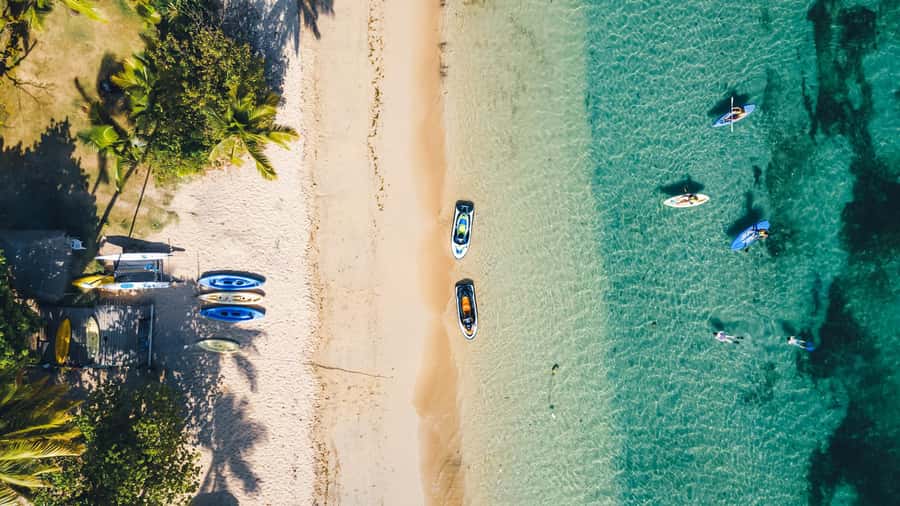
The boat continues to Likuri Island, also known as Robinson Crusoe Island in the tour program. The island portion has a relaxed resort feel, with a beach, hammocks, a bar, and a choice of included activities.
You can spend time in a hammock or use the free activity options. Kayaking, swimming, and snorkeling are available, with snorkeling dependent on weather and sea conditions. If you prefer to stay on land, the medicine jungle bush walk offers a different way to spend the afternoon.
The bush walk connects local plant knowledge with the island environment. The program also includes a visit to an ancient pottery site, along with demonstrations of weaving, carving, and pottery making. These activities give you more cultural context after the village visit, though the exact order can vary during the day.
The island is described as quiet rather than full of nonstop entertainment. That will suit you if you want open time after the morning’s formal program. It may feel slow if you are expecting a packed schedule of major attractions.
A Fijian massage is available at the Likuri Spa, but it is not included. Drinks, including alcoholic and nonalcoholic options, are also extra, as are snacks from the bar. Bring water and some money if you expect to want refreshments beyond lunch.
Same island, a completely different day out:
- Largest Zipline in South Pacific & Cave Exploration in Nadi
★ 5.0 · 437 reviews - Fiji: Malamala Beach Club Private Island Day Pass & Transfer
★ 4.7 · 413 reviews - Nadi: Garden Village Hot Spring & Temple Highlights Tour
★ 4.6 · 339 reviews - Discover Nadi Tour
★ 4.5 · 311 reviews
BBQ lunch, beach time, and optional activities
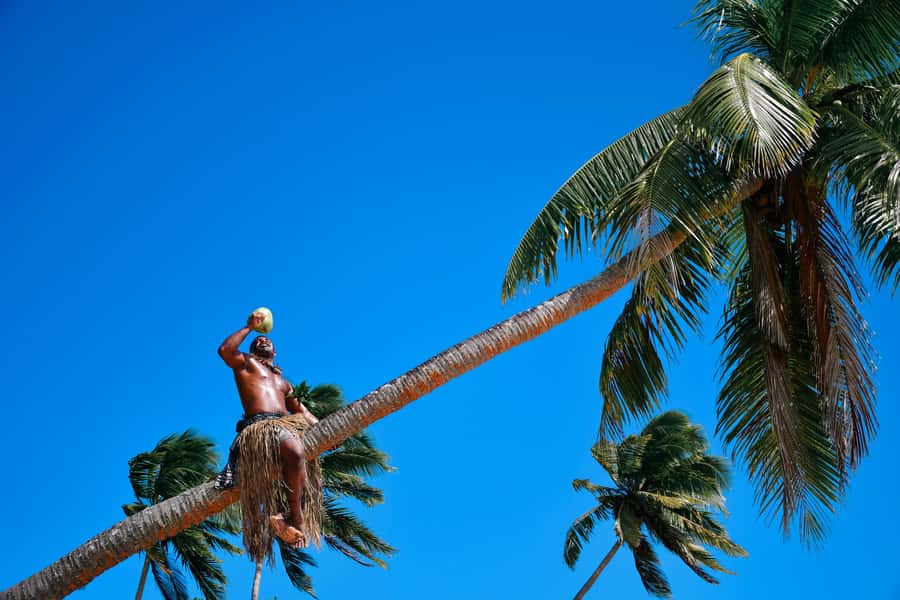
Lunch is a tropical BBQ buffet with salads and island-baked rolls. The food receives good marks, and it is an important part of the value because you are spending the middle of the day on the island rather than arranging your own meal.
The buffet format works well for mixed groups. You can take a larger meal before kayaking or swimming, or keep it light if you plan to relax. Drinks are not included, so budget for those separately.
The beach is a pleasant place to slow down, and the hammocks offer an easy break from the heat. You can choose how active you want to be. Kayaking and swimming suit anyone who wants time on the water, while the bush walk, pottery site, and craft demonstrations give land-based options.
Snorkeling is included when weather conditions permit. Do not book this tour solely for underwater activity, since conditions may cancel it and no fixed snorkeling quality is promised. The day works better if you treat snorkeling as a bonus rather than its central feature.
The island has a slightly worn, faded resort character rather than a polished luxury feel. That is useful to know before you go. One person found the spa pedicure below salon standards, so I would not choose this tour mainly for spa services. The island activities and beach are the better reasons to stay.
The mud-crab cooking lesson
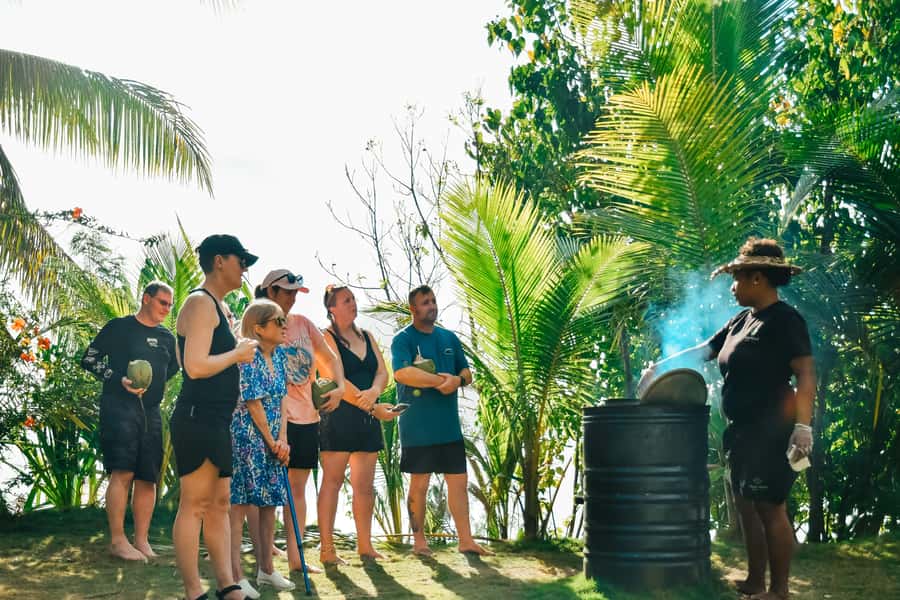
In the afternoon, the island team teaches you how to prepare the mud crab using natural ingredients sourced on the island. A recipe is available to take home, which adds lasting value to a short cooking activity.
The lesson lasts about 30 minutes in the published schedule. That makes it an introduction, not a long kitchen class. You will learn the basic approach and seasoning rather than spend hours working through several dishes.
The wording around this activity deserves care. The tour promises a lesson using the morning catch, yet the actual experience may vary. You may see the crab cooked for the group rather than prepare every step yourself. If the cooking class is important to you, confirm whether you will actively handle the crab and whether tasting the finished dish is part of the meal.
The lesson is still a nice link between the river stop and lunch or afternoon activities. It gives the mud-crab portion a purpose, even if the catching itself is brief.
The river ride back and the real time commitment
The island boat leaves at about 4 p.m. You cruise back along the Tuva River for roughly 30 minutes, then board the coach for the return to your hotel.
The river ride is a calm finish after the island activities. The coach ride is less exciting, especially if you are tired. Waiting for the return bus can also extend the day, so allow more time than the simple six-hour label suggests.
This is particularly important for guests staying far from Robinson Crusoe Jetty. The long pickup route serves many hotels, which is convenient, but it can add stops. If you are staying on the Coral Coast, the tour may take most of your daylight hours and possibly run into the early evening.
If you become unwell during the day, returning independently may be difficult and costly. One person who could not continue found that the only return option was expensive. That is not a reason to avoid the tour, but it is a reason to bring water, use sun protection, and pace yourself.
Is the $118 price good value?
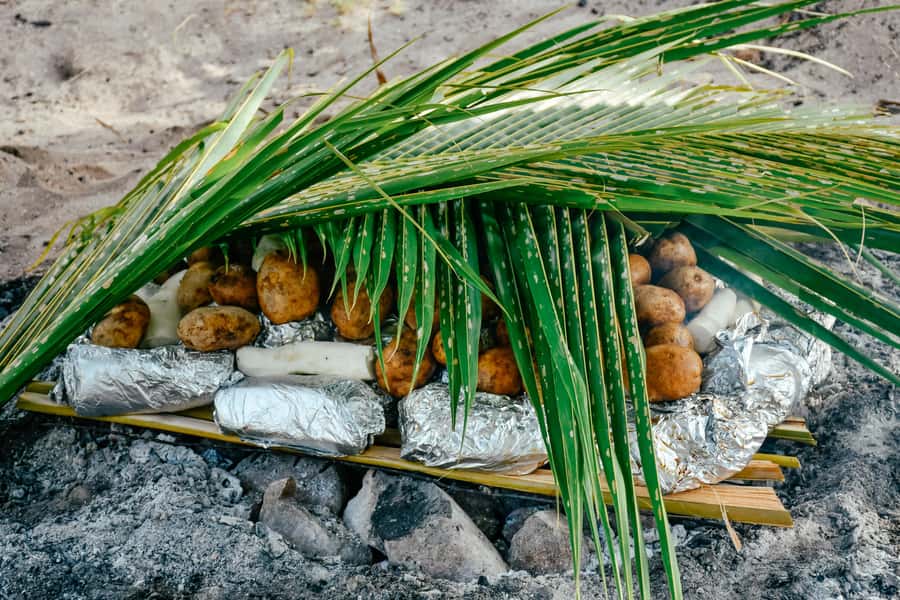
At $118 per person, the tour combines transport, a village visit, a river journey, lunch, several island activities, and the kava ceremony. Compared with arranging separate transfers, a cultural visit, a boat ride, and a meal, the package offers solid value if you plan to use the included activities.
The strongest value comes from the Vusama Village visit and transport. You get hotel pickup, river access, a guided cultural program, and a return transfer without needing to coordinate several providers.
The island portion adds value for people who want a flexible beach day. Kayaking, the bush medicine walk, the pottery site, craft demonstrations, and snorkeling provide choices. You are not paying only for a few minutes of crab catching.
The price is less compelling if you want a serious fishing experience, a luxury island resort, or a focused cooking course. Drinks and bar snacks cost extra, and paid spa services are separate. You should also account for the time cost of a long coach journey.
Free cancellation up to 24 hours ahead and the option to reserve without paying immediately make the booking less rigid. Those terms are useful if your Fiji plans are still shifting, but they do not change the tour’s main practical issue: it is a long day with several transport stages.
Who will enjoy this Fiji tour most?
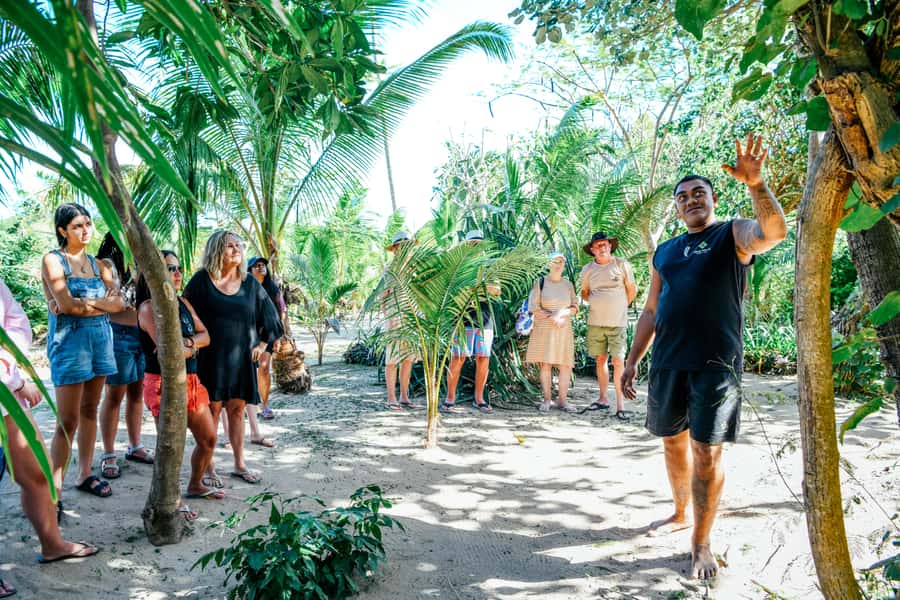
I would recommend it to you if you want several sides of Fiji in one outing. It suits first-time visitors who want a taste of village culture, a traditional ceremony, river scenery, island relaxation, and a buffet lunch without arranging each piece separately.
Families and mixed-age groups may appreciate the choice of activities. One person can kayak, another can use a hammock, and someone else can join the bush walk or watch the craft work. The activity list gives the day flexibility.
It is also a good fit if the village visit matters more to you than the crab catching. The historic setting, welcome, chiefly bure, kava, and farewell dance create the most distinctive part of the experience.
You may want a different tour if your priority is a substantial fishing trip. The mud-crab pots are a short stop, and the catch may not be prepared in the hands-on way you expect. You should also think twice if you dislike long transfers, need a tightly timed return, or want a polished luxury resort day.
The tour is not suitable for wheelchair users, and it is listed as unsuitable for people over 95. Bring a towel, camera, water, and sarong. Alcohol and drugs are not allowed.
Should you book the Vusama Village and mud-crab tour?
Book it if you want culture first, island relaxation second, and mud crabs as a small extra. The village visit is the reason to choose this experience, especially if you value a real community setting, kava, historic context, and direct contact with Fijian traditions.
Book with caution if the title has made you picture hours of crab catching and a full seafood cooking class. That is not the safest expectation. Think of the tour as a full-day combination of Vusama Village, river travel, Likuri Island, BBQ lunch, and optional activities.
Before choosing your date, confirm the practical return time and ask how the crab lesson will run. If you can accept the long day and flexible island pace, the $118 fare gives you a broad introduction to Fiji with a genuinely memorable village stop.
FAQ
How much does the Fiji Village and Mud-Crab Catching Tour cost?
The tour costs $118 per person.
How long does the tour last?
The activity is listed as six hours, with the boat departing Robinson Crusoe Jetty at 10 a.m. and leaving Likuri Island at 4 p.m. Hotel transfers can make the total day longer.
Where does the tour operate?
The tour operates in Central Division Fiji, including Vusama Village on the Tuva River and Likuri Island.
Is hotel pickup included?
Yes. Pickup is included from Nadi and Coral Coast hotels up to Warwick, as well as several listed locations including Nadi International Airport and Port Denarau Terminal.
What happens at Vusama Village?
You receive a flower lei, meet villagers, take part in a kava ceremony, visit the chief’s bure, learn about lali drums, see cultural demonstrations, and join a farewell dance.
Is mud-crab catching included?
Yes. You help the crew pull up mud-crab pots during the river journey toward Likuri Island.
Will I cook the mud crab myself?
A mud-crab cooking lesson is included, and the team teaches you how to prepare the catch with island-sourced ingredients. The amount of hands-on preparation can vary, so confirm the format if this is your main interest.
Is lunch included?
Yes. A tropical BBQ buffet lunch with salads and island-baked rolls is included.
Are drinks included?
No. Alcoholic drinks, nonalcoholic drinks, and snacks from the bar are not included.
What activities are included on Likuri Island?
Included activities and visits include kayaking, snorkeling when weather permits, a medicine jungle bush walk, an ancient pottery site visit, weaving, carving, pottery demonstrations, and the mud-crab cooking lesson.
What should I bring?
Bring a towel, camera, water, and sarong. Alcohol and drugs are not allowed.
Just added around Nadi
- Waterfall and Fijian Village Tour with Light Lunch ex Nadi Area Hotels★ 4.5 · 4 reviews
- CFC Approved Shared Shuttles – Nadi Airport to Wailoaloa Hotels★ 5.0 · 9 reviews
- Private Transfer:Nadi Airport to Fiji Marriott Momi Bay★ 5.0 · 4 reviews
- Roundtrip Transfer Nadi Int Airport -Fiji Marriott Resort Momi Bay(CFC APPROVED)★ 5.0 · 5 reviews
- Private Momi Bay Transfers★ 5.0 · 5 reviews
- CFC Approved Roundtrip Car Transfer – Nadi Airport to Outrigger & Bedarra Inn★ 5.0 · 9 reviews
- Round-Trip Transfer -Nadi Airport – Fiji Marriott Resort Momi Bay★ 5.0 · 9 reviews
- Roundtrip Nadi Airport -Sofitel Resort & Spa(Private Transfer]★ 5.0 · 5 reviews
Tours, compared.

Garden Village Hot Spring & Temple Highlights Tour
Read our review →
CFC Hot Spring Mud Pool,Garden Of Sleeping Giant And Village Visit Half Day Tour
Read our review →
ATV Quad Bike Adventure Tour Inc Hot Springs & Mud Pool (Departs Nadi)
Read our review →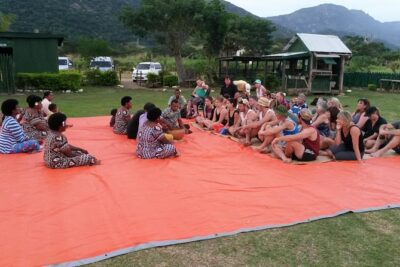
River Tubing Fiji / Suva Shore Excursion Cruise Ship Passengers
Read our review →Browse the lists this tour appears in